We built our own Geiger counter.
Freshman year, our team soldered a radiation detector from bare components, paired it with a Raspberry Pi, and gave it a case and a name to take into the field.
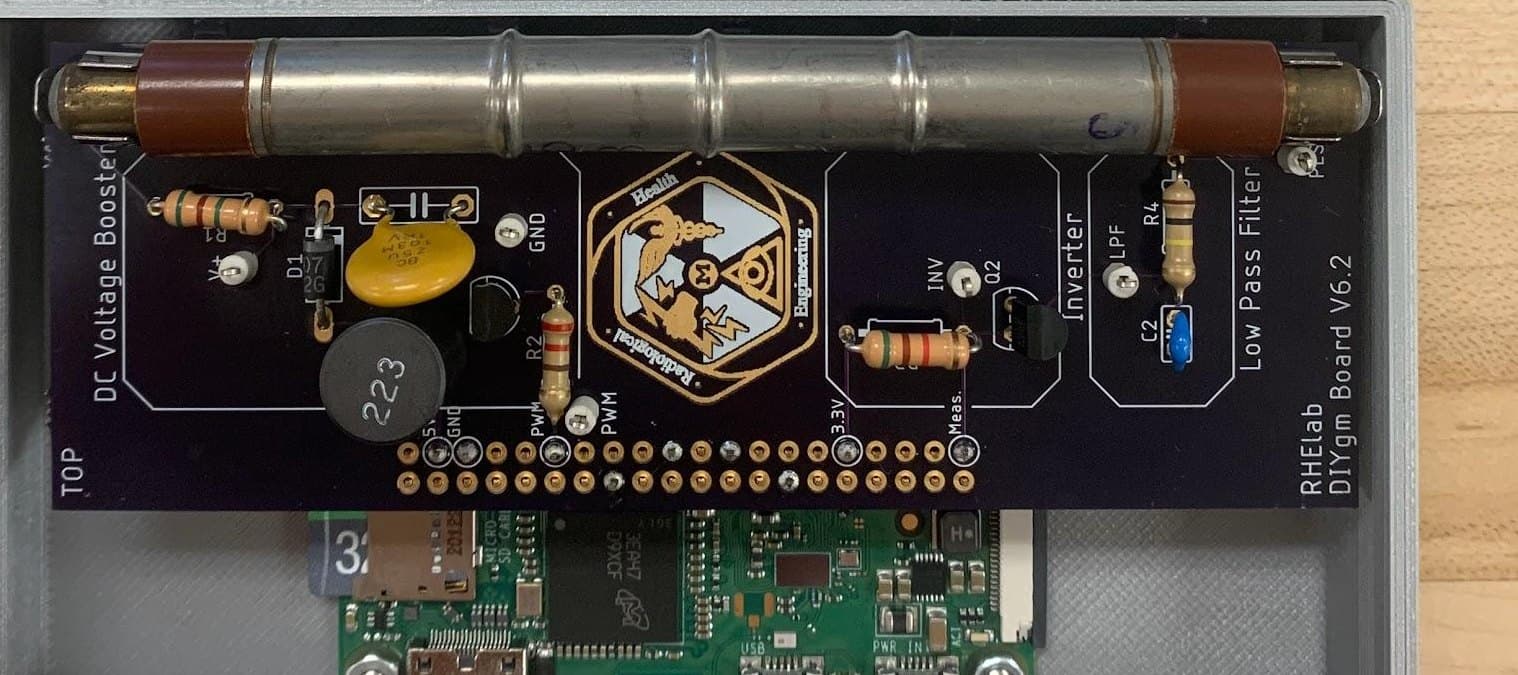
We learned to solder on this board and populated every part ourselves: the high-voltage booster, the inverter and filter stages, and the header that mates it to the Pi. The Geiger-Müller tube was the one piece we didn't build. Once it counted, we designed the case that made it field-ready and the logo that made it ours.
From a particle to a number.
- 1
Geiger-Müller tube
Radiation ionizes the gas inside and the tube fires a brief pulse. The one part we didn't make.
- 2
DC voltage booster
A PWM signal from the Pi switches an inductor to step the supply up to the high voltage the tube needs.
- 3
Inverter
A transistor turns each tube discharge into a clean 3.3 V logic pulse on the Pi's measurement pin.
- 4
Low-pass filter
An RC stage that keeps high-frequency noise from showing up as false counts.
- 5
40-pin header
Joins the board to the Pi: power and PWM out to the board, pulses back to the Pi.
- 6
Raspberry Pi Zero
Counts the pulses and sends the data off the device over Wi-Fi.
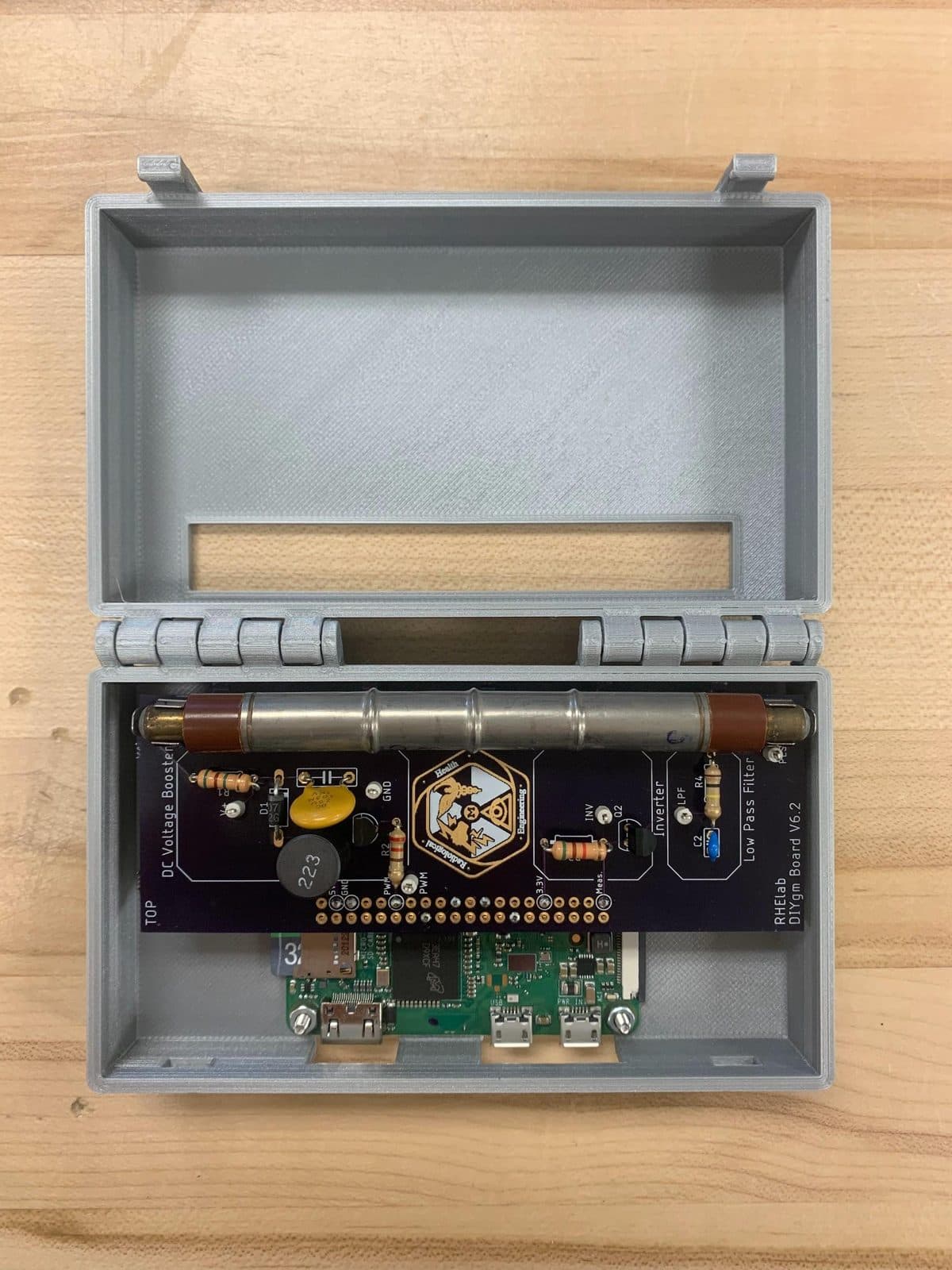
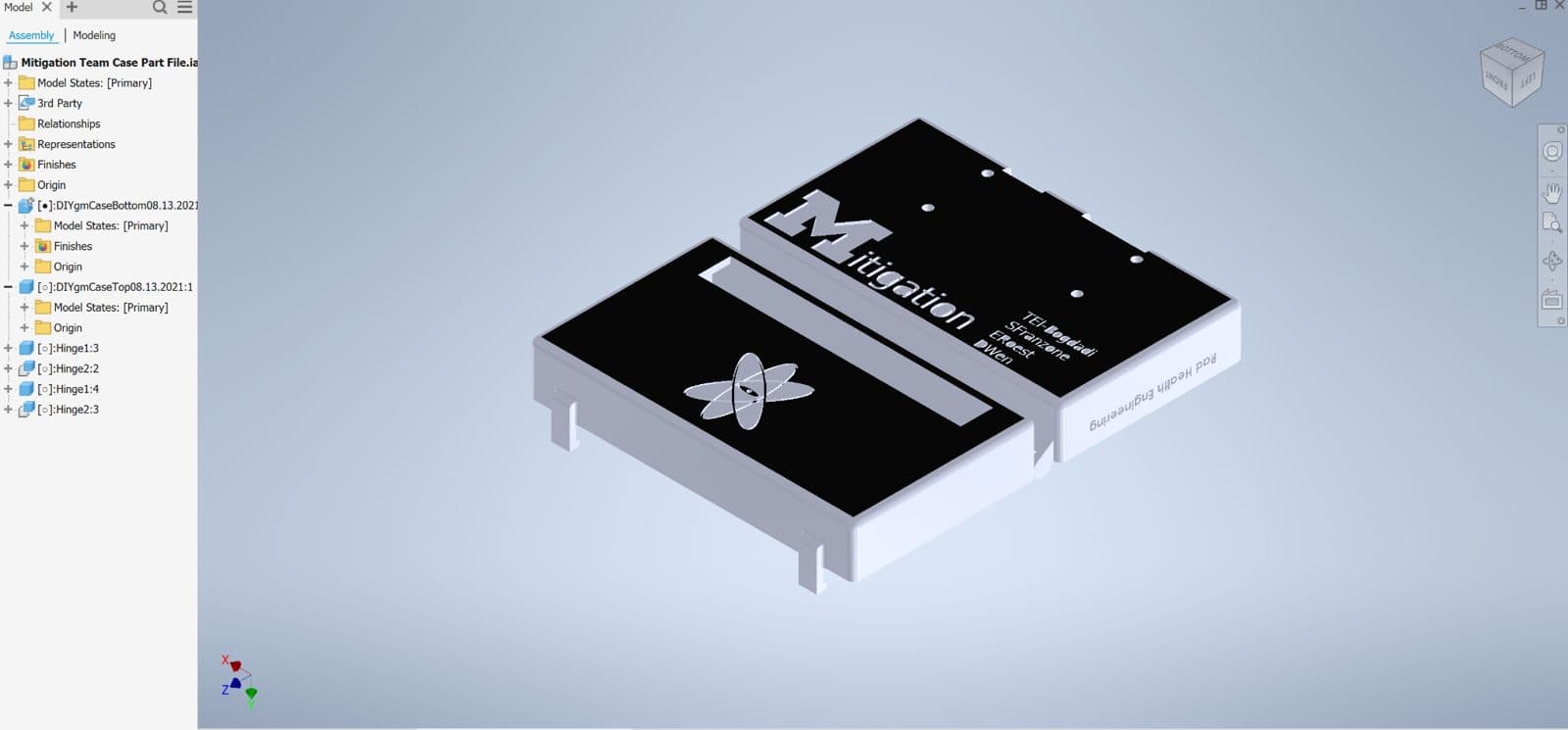
Then we gave it a case.
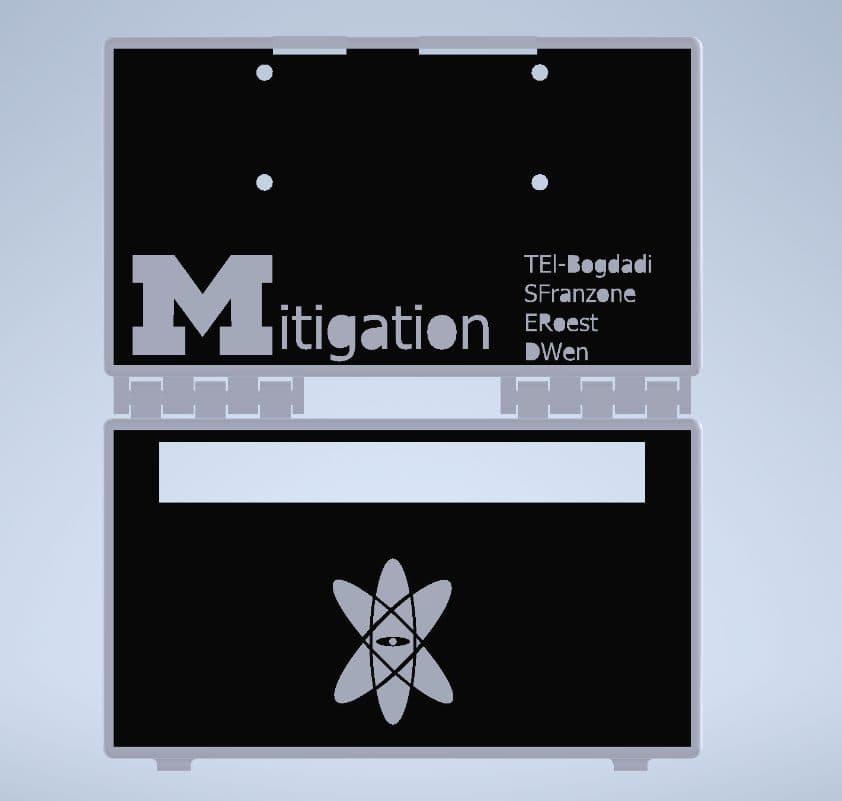
- 1
A window over the tube.
Plastic stops alpha and most beta, so the slot runs the tube's full length.
- 2
Snug, not tight.
Loose, the board rattles and readings drift. Tight, it stresses the joints we'd just soldered.
- 3
Ports where the Pi has them.
Cutouts match the Pi's HDMI and micro-USB ports, so it powers up with the lid closed.
- 4
A lid that opens.
Hinges and clips give access to the board. Getting the hinge mates right was the hardest part of the CAD.
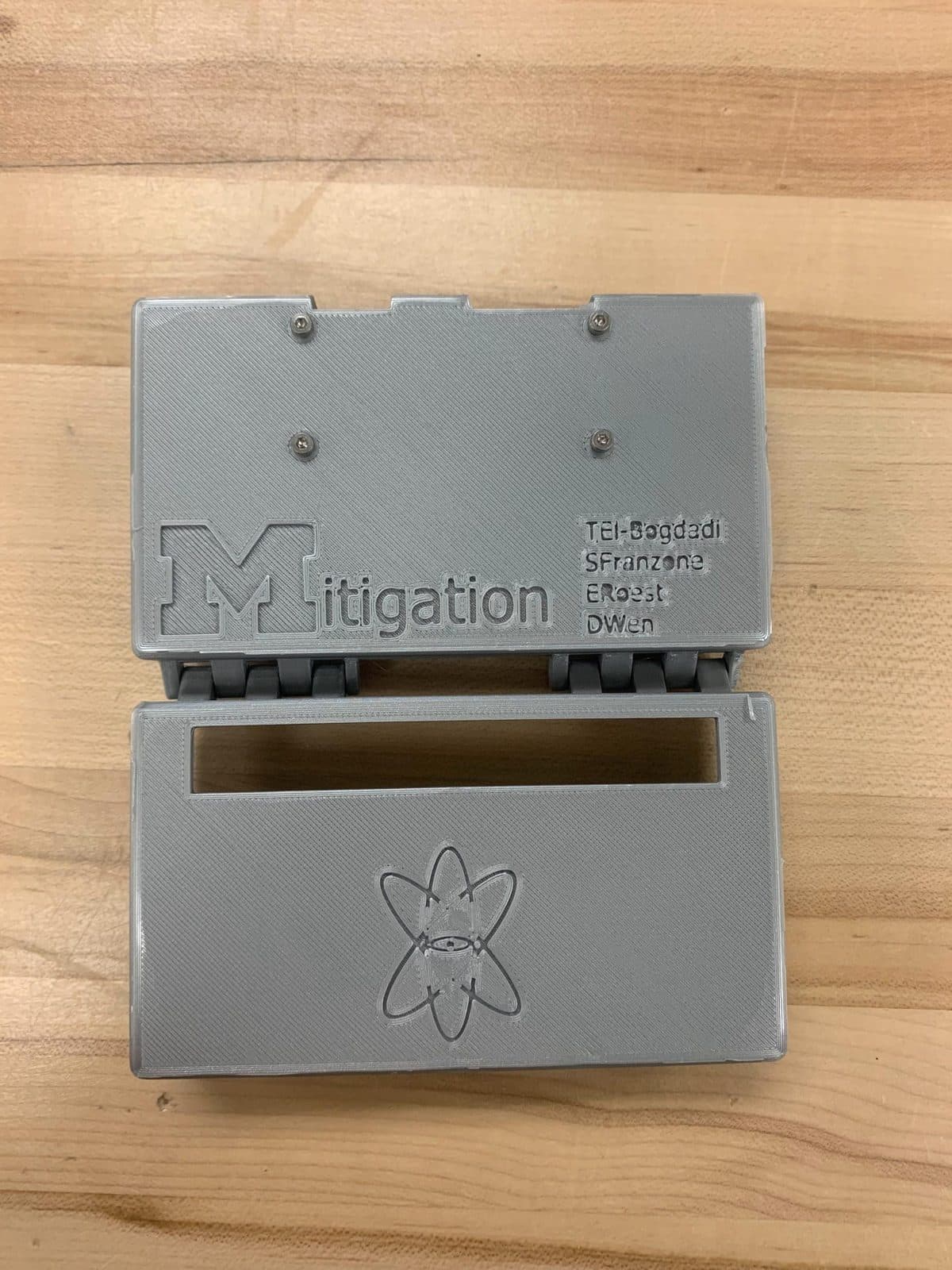
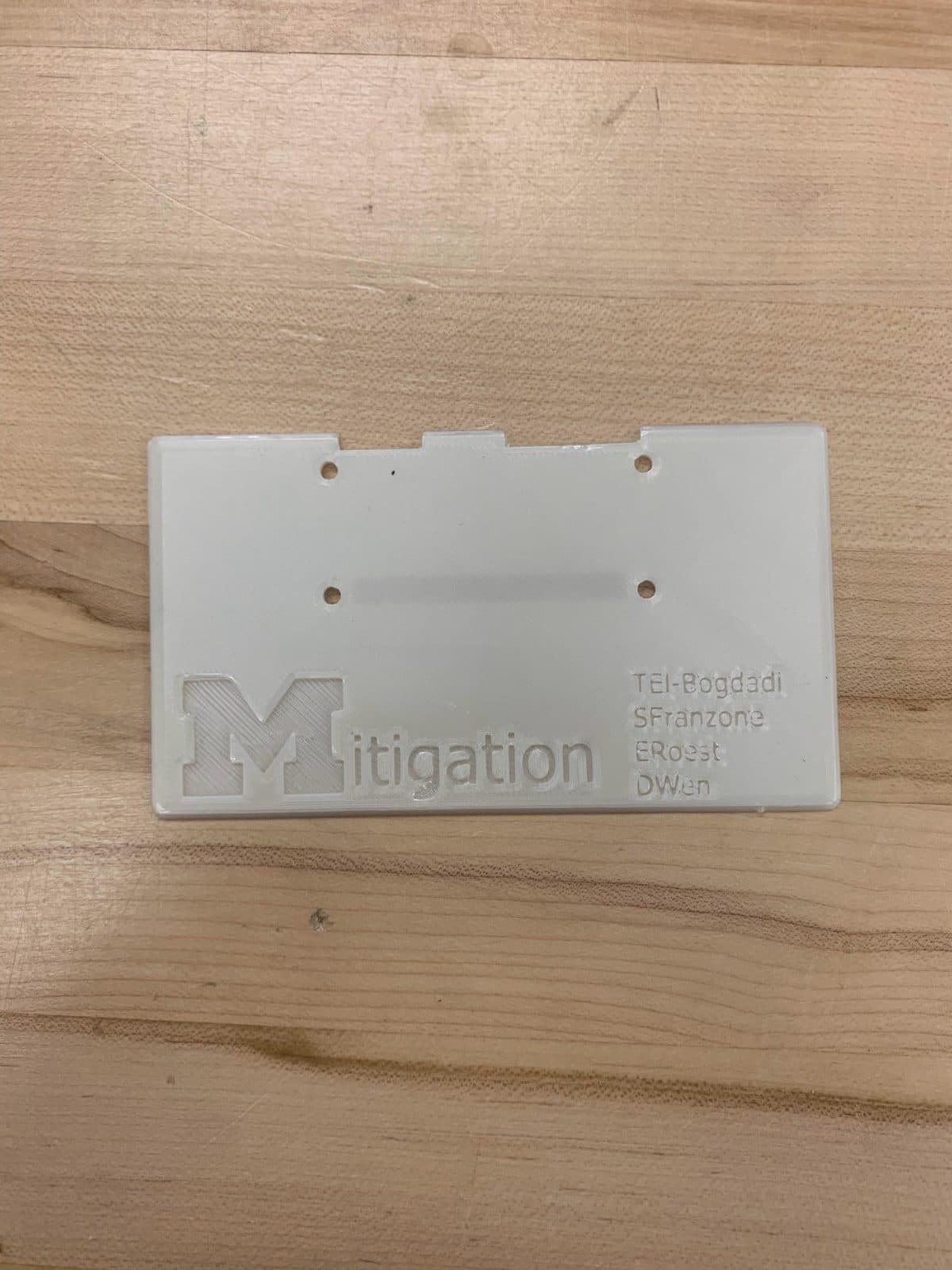
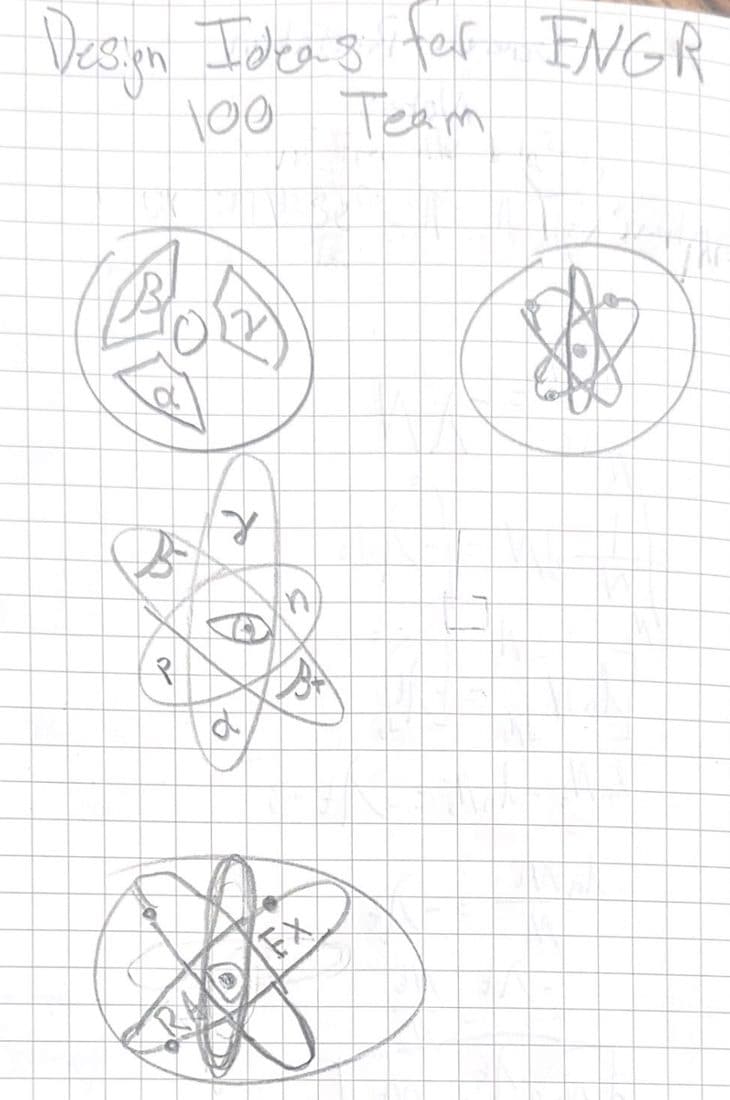
An eye at the center of the atom.
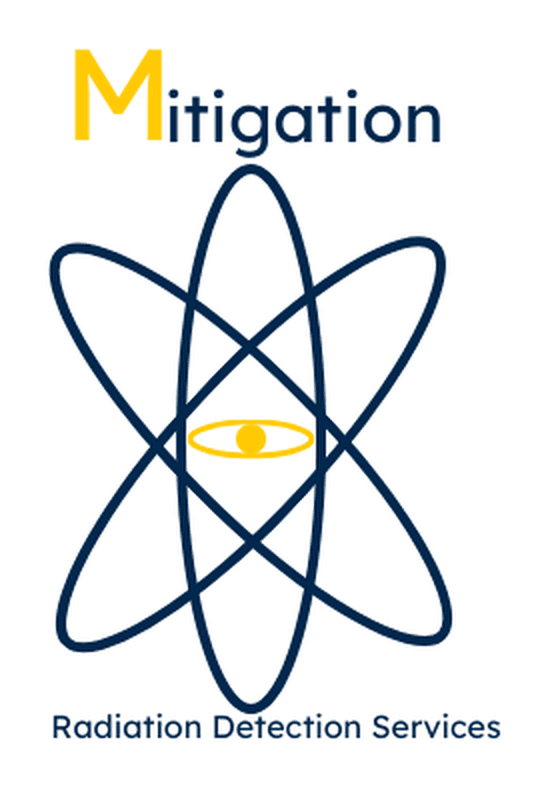
Mitigation means managing radiation risk. The maize M stands in for Michigan's block M.
Rutherford's model. It reads as nuclear before anyone reads a word.
At the nucleus as the focal point: watching and detecting, which is what the counter does.
Radiation Detection Services says what the symbol can't.
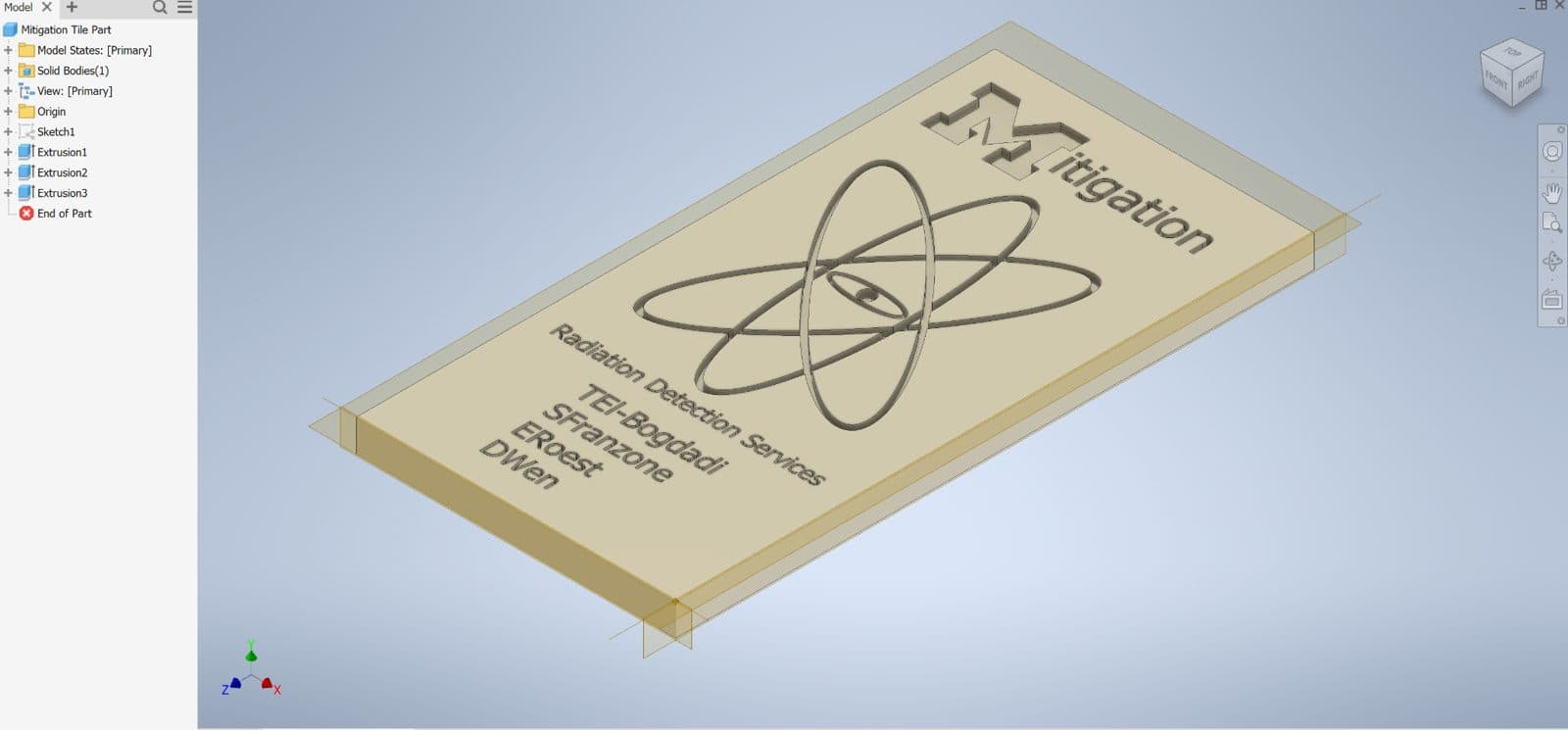
Team Mitigation: Tomas El-Bogdadi, Sophia Franzone, Elliot Vander Roest, David Wen. Board design: DIYgm v6.2, Radiological Health Engineering Lab, University of Michigan.